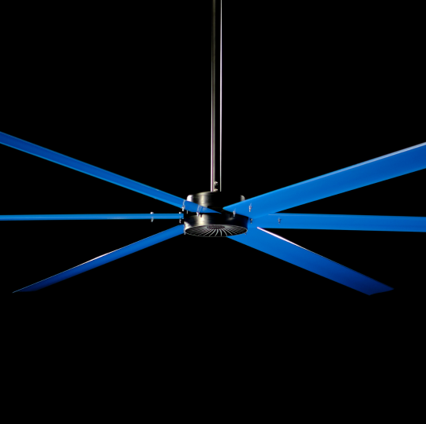
Powerful Airflow. Maximum Efficiency. Unmatched Comfort.
MacroAir is the original innovator of High Volume Low Speed fans, revolutionizing airflow in large commercial and industrial environments since 1998. Designed to move massive volumes of air with minimal energy consumption, MacroAir fans improve comfort, reduce HVAC strain, and create more efficient indoor environments.
At Robert M. Hilberts, Inc., we work with engineers, contractors, and building owners to specify the right MacroAir solution for each application, ensuring optimal performance and long-term value.
Where MacroAir Fans Are Used
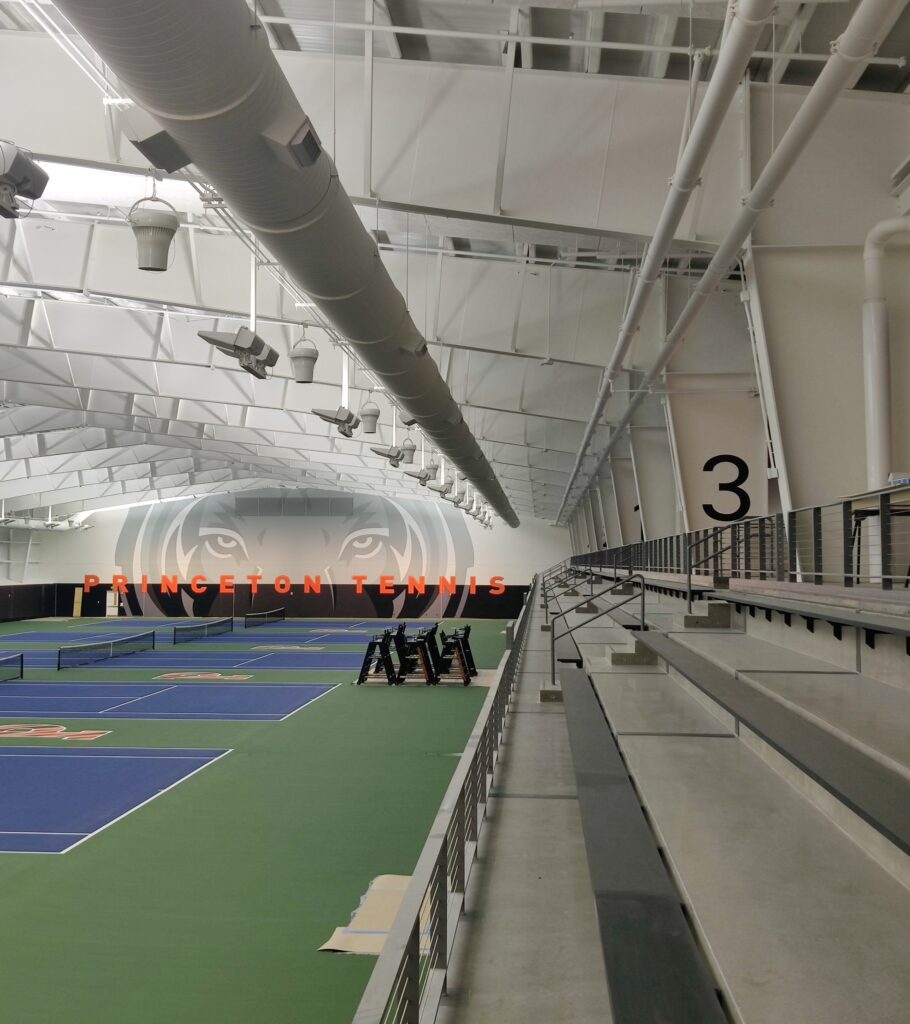
MacroAir HVLS fans are ideal for large commercial and industrial environments where airflow and comfort are critical. These systems are commonly used in warehouses, manufacturing facilities, distribution centers, gymnasiums, aircraft hangars, agricultural buildings, retail spaces, and other large open environments. Anywhere air movement is needed to improve comfort and efficiency, MacroAir delivers a powerful and reliable solution.
What Are HVLS Fans and Why They Matter
High Volume Low Speed fans are designed to circulate large amounts of air at low rotational speeds, creating consistent airflow throughout large spaces. Unlike small high-speed fans, HVLS systems move air efficiently across wide areas, eliminating stagnant zones and improving overall comfort.
Benefits include:
- Reduce cooling costs by up to 30 percent
- Improve air circulation across large spaces
- Support heating efficiency in colder months
- Enhance occupant comfort
Extend HVAC system lifespan
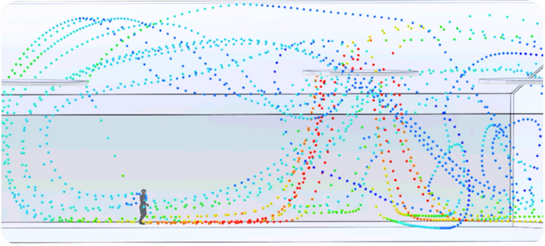
AirViz® Technology – CDF Modeling Capabilities that enable Airflow visualization. This allows for informed decision-making about design and product selection.
How MacroAir Technology Works
MacroAir fans create a gentle, continuous column of air that moves downward and outward across the floor, then recirculates back upward. This constant air movement creates a balanced environment that feels cooler in summer and helps distribute heat in winter.
Their engineering focuses on:
- Direct drive and gear-driven options
- Energy-efficient motor technology
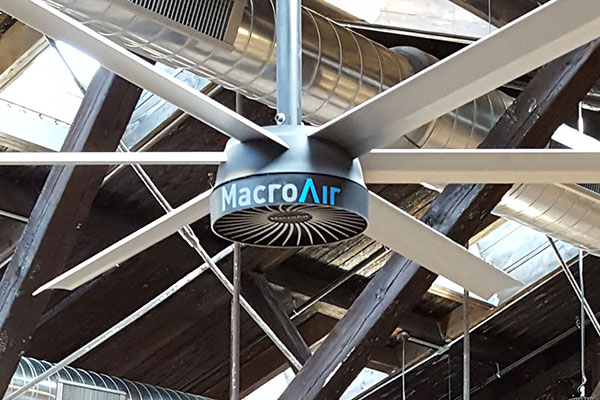
- Large diameter blade systems for maximum coverage
MacroAir Product Solutions
AVDX Series (Direct Drive)
- Direct drive gearless motor
- Ultra quiet operation
- Reduced maintenance due to fewer moving parts
- Ideal for warehouses and manufacturing
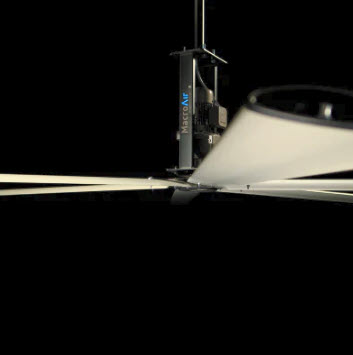
AirVolution Series (Gear Driven)
- Gear driven for high torque performance
- Built for industrial environments
- Cost effective entry point
- Durable and reliable
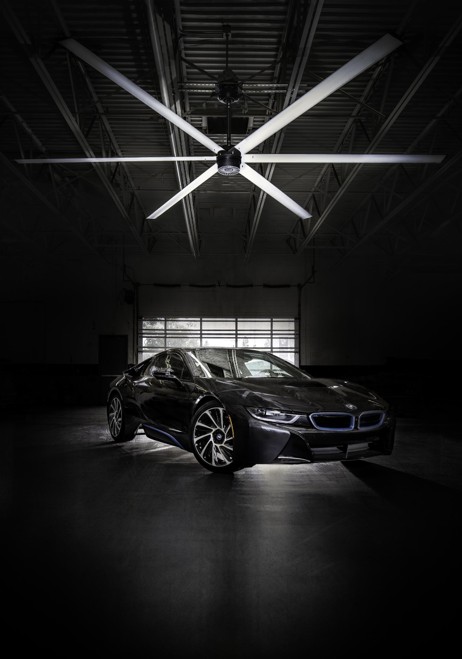
Choosing the Right HVLS Fan
MacroAir offers both direct drive and gear driven fan systems, each suited for different applications.
Direct Drive Advantages:
- Quiet operation
- Lower maintenance
- Lightweight design
Gear Drive Advantages:
- Rugged construction
- Ideal for heavy duty environments
- Lower upfront cost
Hilbert’s helps determine the right system based on your facility, usage, and performance goals.
Control and Smart Integration
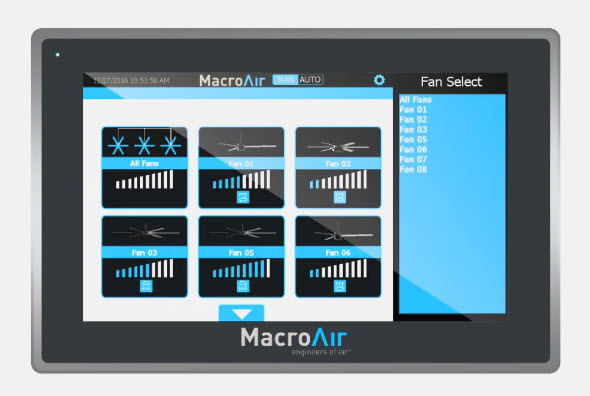
MacroAir systems offer advanced control options to manage airflow across your facility.
- Remote control operation
- Multi-fan control systems
- Building management system integration
- Smart airflow adjustments
Why Work With Hilberts for MarcoAir
Robert M. Hilberts, Inc. does more than supply equipment. We help you get it right the first time.
We work with:
- Engineers and architects
- Mechanical contractors
- Building owners and facility managers
Our team provides:
- Product selection and system design guidance
- Application-specific recommendations
- Coordination with your project team
- Access to industry-leading manufacturers
We ensure you get the right solution for your building, not just a product.
Get Expert Guidance on MacroAir Systems
If you are looking to improve comfort, reduce energy costs, and maximize HVAC performance, our team is here to help.
Contact Robert M. Hilberts, Inc. today to discuss your project and find the right MacroAir solution for your facility.
Airius FAQ'S
What is destratification in HVAC systems
Destratification is the process of mixing air in a building to eliminate temperature differences between the ceiling and floor, improving comfort and efficiency.